What Is Print on Demand? The Complete Guide for Creative Sellers
Learn how print on demand works, which products sell best, and how creative sellers can launch on Etsy or Shopify with less friction and more confidence.
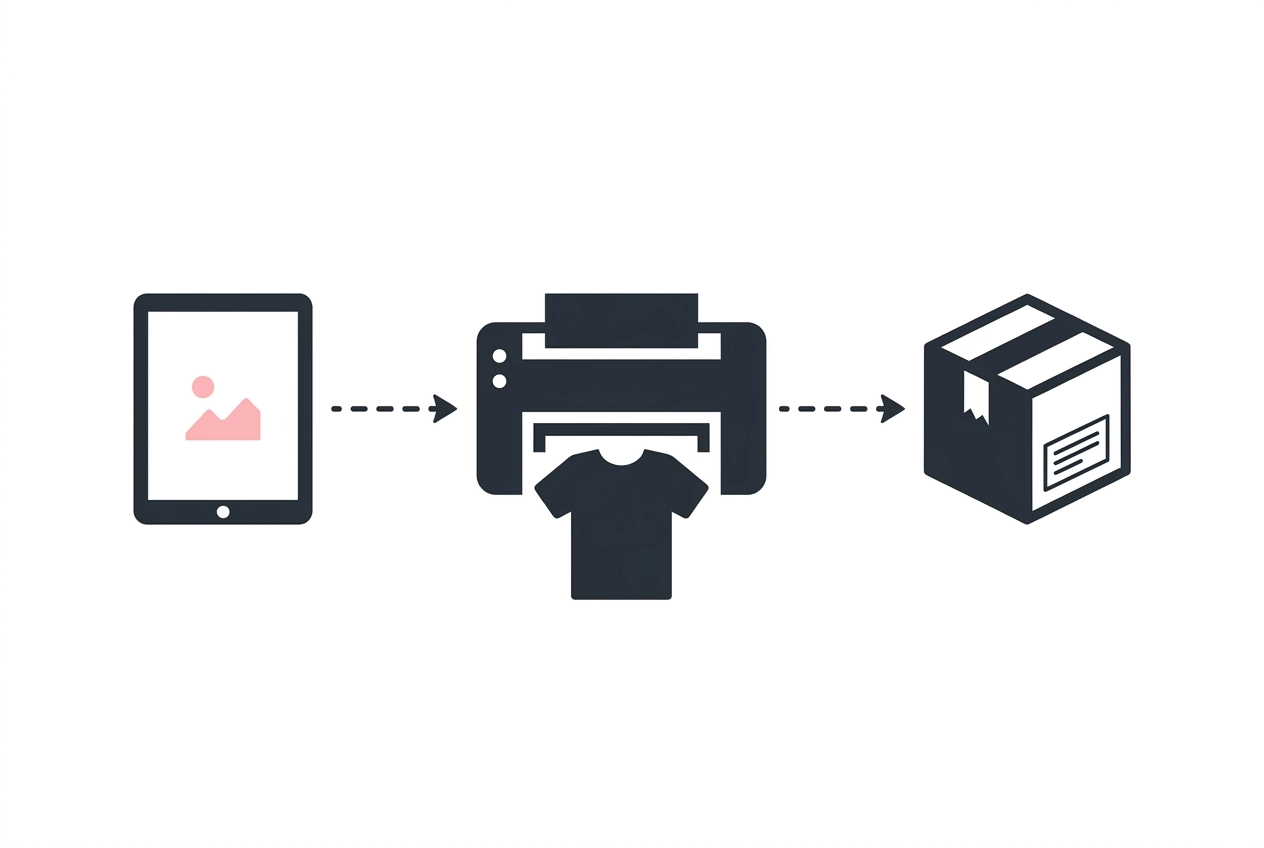
Maybe you've seen someone selling custom t-shirts or mugs online and thought, "I could do that." The good news? You absolutely can, and you don't need a warehouse, a printer, or even upfront inventory to get started. That's the magic of print on demand.
Print on demand is a business model that lets you sell custom products without ever touching them yourself. A third-party supplier handles the printing and shipping every time a customer places an order. It's low-risk, beginner-friendly, and wide open for creative people who have ideas but aren't sure where to start.
In this guide, you'll learn exactly how the process works from start to finish. We'll cover the most popular products to sell, break down the printing technologies behind them, and walk you through choosing between platforms like Etsy and Shopify. You'll also get a clear picture of where the market stands heading into 2026, plus a step-by-step plan to launch your very first product. Whether you're completely new or just looking for clarity, this guide has you covered.
What Print on Demand Actually Means (and Why It's Different)
Print on demand is a fulfilment model where a product is made only after a customer buys it. No stock is printed in advance, no warehouse is needed, and no upfront capital is tied up in inventory that might never sell.
That's a significant departure from how physical products have traditionally worked. With wholesale or screen-printing, you typically commit to a minimum order quantity, pay for everything upfront, and hope demand materialises. If it doesn't, you're left with boxes of unsold stock and a lighter bank account.
With print on demand, a third-party fulfilment provider sits between you and the customer. They handle the printing, packing, and shipping the moment an order comes in. Your job is the creative side: the designs, the listings, the brand. You can see examples of what that looks like in practice over at Made with PODly.
This model is particularly well suited to independent creators, side-hustlers, and small Etsy or Shopify shop owners. You can test ten different product ideas with zero stock risk, and only double down on what actually sells.
One misconception worth clearing up early: print on demand is often lumped in with dropshipping, but there's a meaningful difference. With traditional dropshipping, someone else owns the product. With POD, the designs and brand identity are entirely yours. You own the intellectual property. The fulfilment provider is a manufacturer, not a brand owner.
How the Print-on-Demand Process Works, Step by Step
Here is what actually happens from the moment you create a design to the moment a customer receives their order.
The order lifecycle runs like this:
You create a design and upload it to your chosen fulfillment provider's platform
You connect that product to your Etsy or Shopify storefront and set your retail price
A customer places an order on your shop
The order routes automatically to the fulfilment provider's print queue
The item is printed, quality-checked, packaged, and shipped directly to your customer
Your margin is simple: if the fulfilment provider's base cost for a mug is €6 and you list it for €18, your gross margin is €12. That gap has to cover platform fees and still leave a worthwhile profit, so pricing it right matters from day one. You can find a breakdown in our guide to POD print-prep.
The Etsy or Shopify integration happens via API or a native app sync. Orders flow across automatically with no manual forwarding needed, and tracking updates push back to your storefront.
What you control vs. what they control:
You control | Fulfilment provider controls |
|---|---|
Design, retail price, product selection | Production timeline, print quality, shipping speeds |
Listing copy and mockups | Whether branded inserts are supported |
Turnaround times and print quality are largely in the provider's hands, so ordering samples before you launch is always worth doing.
What You Can Sell: Product Categories That Dominate the Market
Now you know how POD works, the next question is: what should you actually sell?
Market research firms including Persistence Market Research and Research and Markets consistently identify three dominant product segments: apparel, home décor, and drinkware and accessories. These three categories account for the bulk of POD consumer demand as of early 2026, and all three are showing sustained growth rather than cooling off.
That said, not all categories perform equally for every seller. Your product mix affects your margins, your shipping costs, and who you are targeting. A mug ships very differently to a hoodie, and the buyer searching for personalised wall art is a different person to the one buying a slogan tee.
Apparel remains the highest-volume entry point for most beginners. Home décor and accessories are growing fast alongside it, opening up real opportunities if you want to pick a niche approach that suits your goals. The next three sections break each category down in detail.
Apparel
Apparel, led by T-shirts, hoodies, and sweatshirts, is where most new POD sellers begin, with consistent buyer demand year-round.
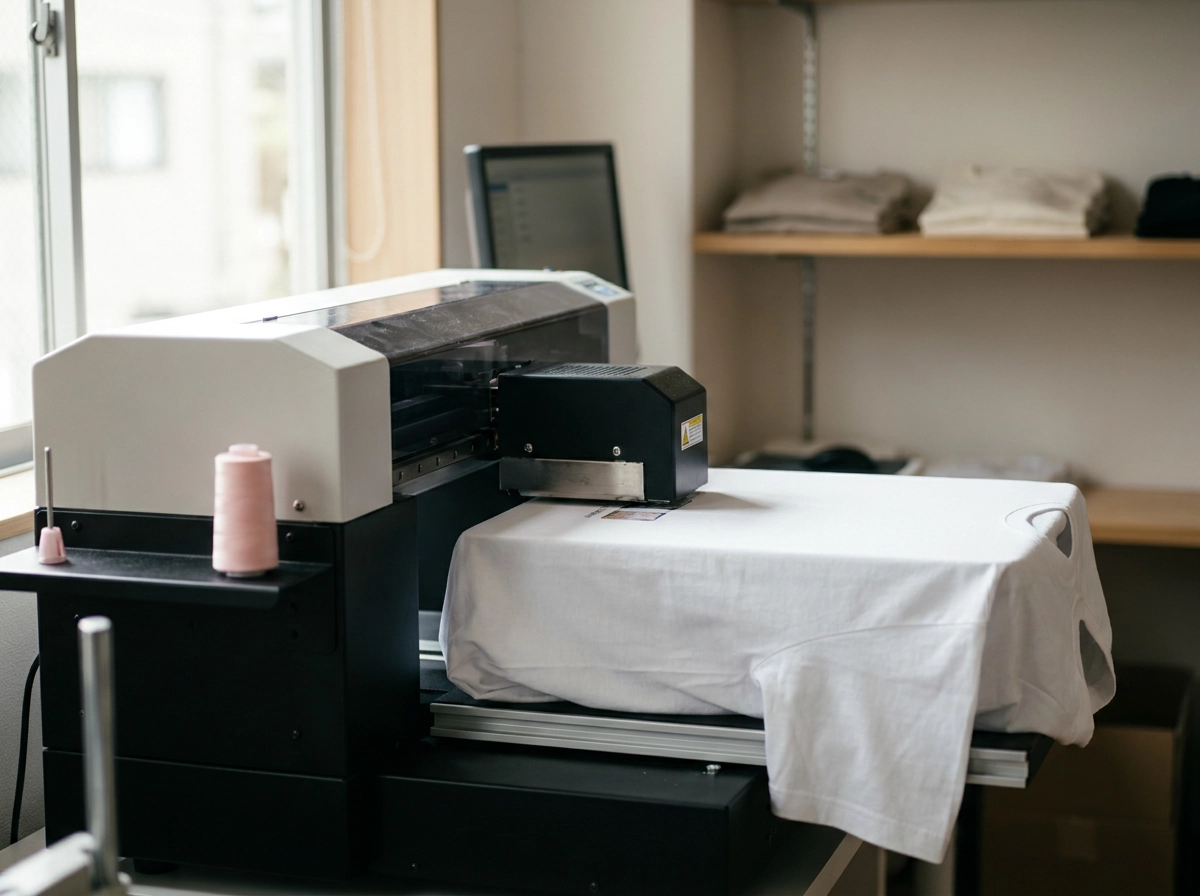
Most apparel is produced using direct-to-garment (DTG) printing, which works like an inkjet printer directly onto fabric.
The bigger challenge is standing out. A generic "dog mum" tee competes with thousands of near-identical listings. A tee designed specifically for, say, border collie owners who do agility training competes with far fewer. Niche specificity is the independent seller's main competitive edge against larger shops.
Seasonal gifting periods tend to drive apparel demand, so planning listings in advance is worthwhile.
Need inspiration for what a niche launch actually looks like? Check out Made with PODly for real examples.
Home Décor
Home décor is where print on demand gets genuinely interesting for margin. Canvas prints, wall art, framed posters, throw pillows, and blankets all fall into this category, and it carries strong gifting appeal that apparel often lacks.
The practical upside: home décor POD products can command higher average order values than basic apparel, which improves what you actually pocket per sale once platform fees are taken out.
On the production side, soft goods like blankets and throw pillows are usually made using dye-sublimation printing, a heat-transfer process that bonds ink directly into polyester fibres. The result is vivid colour that holds up through washing rather than cracking or fading. Not every fulfilment provider uses the same method, so it is worth confirming which technology your supplier uses before you launch, as it directly affects how the finished product looks and wears.
The biggest opportunity in this category right now is personalisation. Listings that offer personalisation, a name, date, or short message, add perceived value that a generic design cannot match, and personalised items are among the most popular gifts on Etsy. A wedding date on a blanket or a family name on a canvas print creates a reason for buyers to choose your listing over a cheaper alternative.
Drinkware and Accessories
Drinkware and accessories are a surprisingly strong entry point for beginners.
The core products are mugs, tumblers, water bottles, tote bags, and phone cases. Mugs punch above their weight: they are a perennial gift staple with demand that holds up year-round, not just at Christmas, making them a low-risk starting point when you are still testing which niches resonate.
Tote bags and phone cases are worth adding early. Their base production costs are often competitive, so you can price attractively while keeping margins healthy. That matters when your shop has no review history and price confidence is thin.
The bigger opportunity comes once a few products are live. Accessories bundle naturally with apparel and home décor inside a themed shop. A customer browsing your dog-lover hoodie may add a matching mug to their basket, lifting average order value without extra advertising spend.
Getting your tags right across all these products matters more than most new sellers realise. The rules that matter when writing Etsy tags apply just as much to a mug listing as to a T-shirt.
Printing Technologies Explained: DTG, DTF, and Dye-Sublimation
The products you choose to sell are shaped directly by the technology used to print them. Here is a plain-English breakdown of the three methods you will encounter.
DTG (direct-to-garment) uses inkjet technology to print directly onto fabric, much like a desktop printer but for cotton apparel. It handles complex, multi-colour designs well. Check your fulfilment provider's upload guidelines for resolution and file-format requirements before submitting designs.
DTF (direct-to-film) prints onto a special film that is then heat-transferred onto the garment. It is a newer method increasingly adopted by fulfilment providers, valued for its flexibility across fabric types.
Dye-sublimation bonds ink into polyester fibres via heat, the method used for mugs, cushion covers, and blankets, producing vivid colour that holds up through washing.
The technology your fulfilment provider uses determines which products are available, how colours hold up on dark fabrics, and how well prints survive washing.
One practical rule: always order a physical sample before launching. Mockups look polished but cannot replicate real print quality, colour accuracy, or hand-feel. A sample order costs a few euro and prevents a poor product from collecting bad reviews.
Where to Sell: Etsy Marketplace vs. Your Own Shopify Store
Once you know how your product will be printed, the next decision is where it will be sold. This comes down to a fundamental trade-off: built-in traffic versus brand control.
Etsy is a marketplace where buyers are already searching for products like yours. You benefit from existing buyer intent, an integrated search algorithm, and zero need to build your own audience from day one. Getting started costs relatively little, Etsy charges €0.18 (approximately $0.20 USD) per listing rather than a substantial monthly subscription. For a beginner testing whether anyone actually wants your designs, that is a meaningful advantage.
The limitations are real, though. Etsy charges listing fees, transaction fees, and payment processing fees on every sale, all of which compress your margin. Your visibility depends on an algorithm you do not control, and if that algorithm shifts, your traffic can drop overnight. Your visibility and customer relationships are tied to the platform's terms, which limits long-term brand independence.
Shopify flips that dynamic. You own your store, your customer data, and your brand identity entirely. There are no marketplace fees cutting into each transaction, and you can run email marketing and paid advertising without platform restrictions. If you want to pick EverBee if a research tool fits your workflow, you are making those decisions on your own terms.
The catch is traffic. On Shopify, you are responsible for every visitor through SEO, paid ads, or social media. That takes time and budget that most early-stage sellers do not yet have.
The practical recommendation: start on Etsy to validate that real buyers want your product, then build a Shopify store once you have confirmed a winning niche.
The Real State of the POD Market in 2026
Now that you have a clearer picture of where to sell, it is worth stepping back to look at the broader market you are entering.
The POD industry is in a sustained growth phase. Mordor Intelligence projects the market will reach $46.43 billion by 2031, growing at a 25% compound annual growth rate. Multiple independent firms, including Precedence Research and Straits Research, are forecasting through 2031–2035, signalling long-term expansion rather than a plateau.
A few things make this especially relevant for independent sellers:
Creators are a named segment. Formal market research tracks "Individuals and Creators" as a distinct end-user group alongside businesses. E-commerce marketplaces are tracked as a separate distribution channel. You are not an afterthought in this market; you are part of its core structure.
The pandemic accelerated the opportunity. COVID-19 had a documented impact on the print-on-demand industry, and the market demonstrated resilience through that disruption.
Printing technology is improving. DTG, DTF, and dye-sublimation are each tracked as distinct, growing segments. More competition between technologies means better print quality and a wider product range for sellers sourcing across categories.
None of this means success is guaranteed, and no guarantees come with entering any market. What the data does confirm is that the window is open and the infrastructure supporting independent sellers is maturing.
The Number One Bottleneck for New POD Sellers (and How to Solve It)
So the market opportunity is real and growing. The harder truth? Most new sellers never reach it.
The barrier is rarely technical. Connecting a fulfilment provider to an Etsy shop takes an afternoon. The real sticking point is the blank page that appears right after you have a product idea: What direction should the design go? What do you actually write in a listing title? What price won't scare buyers off or destroy your margin? What do you post on social when the listing goes live?
Each of those questions is manageable on its own. Together, they compound into paralysis. Sellers stall, momentum drains, and shops get quietly abandoned before a single product ever finds its audience.
This is precisely the problem PODly was built to solve. It's an AI launch assistant that takes one product idea and returns a complete launch pack: design direction, listing copy, pricing guidance, and content ideas for promotion. Everything a seller needs to go from concept to live drop, delivered in one go.
That means no hiring a copywriter for your first listing, no guessing at price points, no staring at a blank caption box the night before you want to publish. PODly removes the friction between having an idea and actually launching it, so the blank-page problem stops being the reason creative sellers don't start.
How to Launch Your First Print-on-Demand Product
You do not need everything perfect before you go live. You need five things done well enough to get real feedback.
Validate your idea using Etsy search signals to confirm buyers are already looking for what you want to sell.
Generate a design direction so you have a clear creative brief before you open Canva or brief a designer.
Write your listing copy, including a keyword-rich title, all 13 tags, and a description that converts browsers into buyers.
Set your price using your fulfilment base cost plus platform fees plus a genuine profit margin.
Go live and promote with at least one content channel driving early traffic.
That is the full journey from zero to a live listing. A product live on Etsy earning real clicks and favourites teaches you more in a fortnight than a month spent perfecting a design nobody has seen yet. Ship first, refine second.
Step 1: Validate Your Product Idea
Before touching a design tool, spend time in Etsy's search bar. Type your product idea and watch the autocomplete suggestions, those completions reflect real searches by real buyers. If listings in those results carry the bestseller badge, that confirms people are actively purchasing in this niche, not just browsing.
Next, run your shortlisted niche keywords through a free tool like Alura or Erank. You want to see consistent monthly search volume, not a one-off spike. If the only person searching for your idea is you, no amount of great design will fix that.
Then look closely at the top listings in your niche. Do they have reviews? Good. Now check the design quality and the listing copy. If both are mediocre, that gap is your opening. A better-executed product with sharper copy can absolutely outrank an established listing over time.
Finally, do not stop at one idea. Validate at least three product ideas before committing to any of them. Treat it as a focused research sprint of an hour or two, comparing the evidence side by side. The idea with the clearest demand signal and the weakest existing competition is the one worth your time and effort.
Step 2: Generate Your Design Direction
Once you have a validated product idea, the next trap is opening Canva immediately and hoping something good appears.
Design direction is the brief you create before any design work starts. It pins down your colour palette, visual style (minimalist, illustrative, typographic, vintage), mood, and the key elements the design needs to communicate. Without it, you are guessing.
Most beginners skip this step and produce generic work that fails to connect with a specific audience.
This is where PODly earns its keep. Feed it your product idea and it generates a specific design direction brief, so instead of a blank canvas, you have a defined starting point: the right palette, the right style, the right mood for your niche.
You do not need to be a designer to use it. A clear brief means you can work confidently in Canva or Adobe Express, or hand it to a freelancer on Fiverr knowing the output will actually suit the audience you validated in Step 1.
Step 3: Write Your Listing Copy
With your design direction sorted, the next step is turning that brief into words that get your product found and bought.
Listing copy on Etsy means four things: your title, your tags (up to 13), your description, and a thumbnail-level summary that hooks the right buyer. On Shopify, add a meta description and full product page copy to that list.
Front-load your highest-intent keywords into the first words of your title, fill all available tag slots, and write them in the language actual buyers use when searching, not the language a designer uses when describing their work. "Funny dog mum mug" outperforms "illustrated canine typography vessel" every time.
Beyond search, well-written copy does the selling while you sleep. It answers the questions a buyer would ask in a shop, builds confidence in the product, and nudges browsers into buyers without you being there.
This is where many new sellers stall. PODly generates a keyword-optimised title, description, and tag suggestions as part of its launch pack, so you can publish a complete, conversion-ready listing without writing a single word from scratch.
Step 4: Set Your Pricing
With your listing copy sorted, pricing is the next place beginners either protect their margin or quietly kill it.
The basic formula is straightforward: fulfillment base cost + platform fees + desired profit margin = retail price. Add up what the print costs you, what Etsy or Shopify takes per sale, and then add what you actually want to earn. Whatever that total is, that is your floor, not your ceiling.
The most common mistake is ignoring the ceiling entirely and just matching the cheapest listing in search results. That race to the bottom destroys your margin and tends to attract bargain hunters who never come back, rather than buyers who connect with your niche and return for more.
Here is the thing about perceived value in print on demand: the physical mug or hoodie is often identical across sellers. What buyers are actually paying for is relevance. A product designed for a specific niche, with strong mockups and a well-written listing, consistently commands a higher price than a generic equivalent. Niche positioning is your pricing power.
PODly builds pricing guidance directly into its launch pack, giving new sellers a realistic starting price range based on product category and niche, so you are working from a considered starting point rather than guesswork.
Step 5: Go Live and Promote
With pricing sorted, you're ready to publish. Run through this minimum viable launch checklist before you go live:
Mockup images uploaded (at least three, showing the product in context)
Listing copy published with your title, description, and all tags filled
Pricing set at your target margin
Fulfillment integration tested with a real sample order placed and received
That last one matters. A physical sample tells you whether print quality meets expectations before a paying customer finds out for you.
Your new listing has zero organic ranking on day one, so social promotion is not optional. Pinterest pins, TikTok product videos, and Instagram Reels are strong free channels for putting your product in front of people who were not actively searching for it.
Treat the first 30 days as a data collection sprint, not a results sprint. On Etsy, clicks, favourites, and conversion rate signal whether your niche, title, and images are working. Low clicks usually mean the title needs work; low conversion usually points to images or pricing.
If you are staring at a blank page wondering what to post, PODly's launch pack includes content ideas for social posts and short-form video, so you have a starting point ready the moment your listing goes live.
Frequently Asked Questions About Print on Demand

Is print on demand profitable? Yes, but honestly: per-unit margins are lower than wholesale. The trade-off is zero upfront stock, so you risk no capital. Profitability scales with niche selection, pricing discipline, and how many listings you build over time.
How long does it take to make a first sale? New Etsy POD shops typically take several weeks to months to see a first sale, depending on listing volume and niche competition. Treat the first few weeks as building your foundation, not waiting for results.
Do I need design skills? No, but you do need a clear design brief. Without direction, even great tools produce generic results. Canva handles the execution; AI assistants like PODly generate the brief itself, so non-designers have a specific starting point rather than a blank page.
Can I run this alongside a full-time job? Absolutely. Fulfilment is automated and asynchronous. Once a listing is live, orders are printed and shipped without you being present. That makes POD one of the few business models genuinely suited to someone who cannot commit full-time hours from day one.
What is the difference between Printful and Printify? Both are major fulfilment providers, but they use different supplier networks, carry different product catalogues, and have different base costs. Neither is universally better. The right choice depends on which specific products you want to sell and which supplier locations best serve your customers.
Your Next Steps in Print on Demand
The answers above cover the setup. Now it comes down to one thing: starting.
Print on demand removes the inventory barrier, but the harder obstacle for most beginners is moving from a product idea to a live listing without losing momentum along the way.
The timing still works in your favour. Independent forecasters project the POD market growing through 2031 to 2035, so the opportunity is not closing. Sellers who launch in an underserved niche while competition is thin are better positioned as the market grows.
So here is your one action for today: pick a single product idea, run it through the validation checklist in Step 1 of this guide, then use PODly to generate a complete launch pack covering design direction, listing copy, pricing guidance, and content ideas. The blank page should never be the reason you do not start.
Conclusion
Print on demand is one of the most accessible business models available to independent sellers today. No inventory, no upfront manufacturing costs, and no fulfilment headaches standing between your idea and your first sale.
The core takeaways from this guide are straightforward. POD works by connecting your designs to on-demand production and shipping. Your success depends on niche validation, strong listing copy, and smart pricing. The market is still growing, and early movers in underserved niches build compounding advantages over time.
You now have the complete framework to move forward. Pick your product, validate your niche, and use PODly to generate everything you need to go live with confidence. Your first listing is closer than you think.